Skip to content

Terminals and mobile

The right way in for each door.

Four terminals, six verification methods at the door, and five more on the phone. Every one of them controls the door and records the attendance in the same moment, so there is no second system to reconcile at the end of the month.

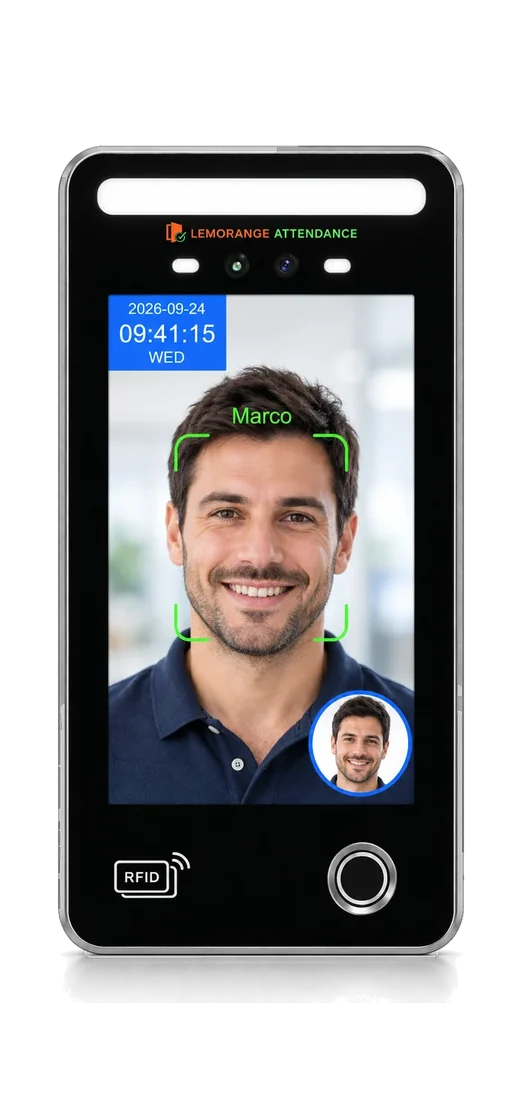
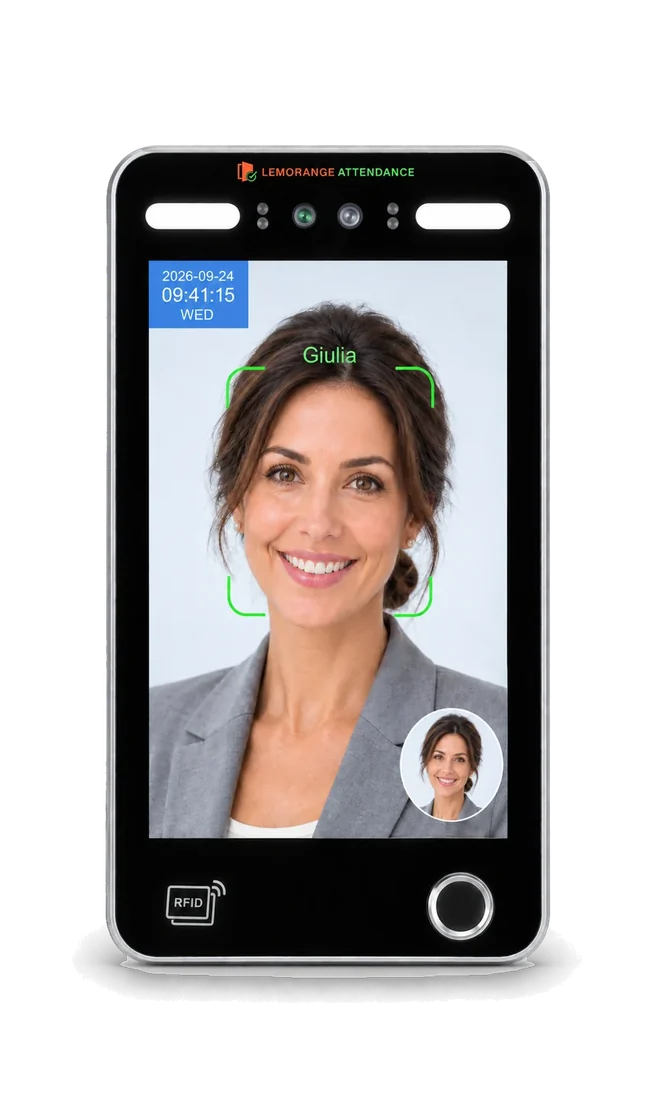
  • AI24F

    We ran seven checks on a physical unit: every method it supports, in and out, a disconnect and replay, a duplicate event, an unknown enrolment, and a shift across midnight.

    A face read in under a fifth of a second at up to 2.5 m, on two cameras so a photograph will not pass. Fingerprint, card and PIN behind it.

    • Face
    • Fingerprint
    • Card
    • PIN
    AI24F in full
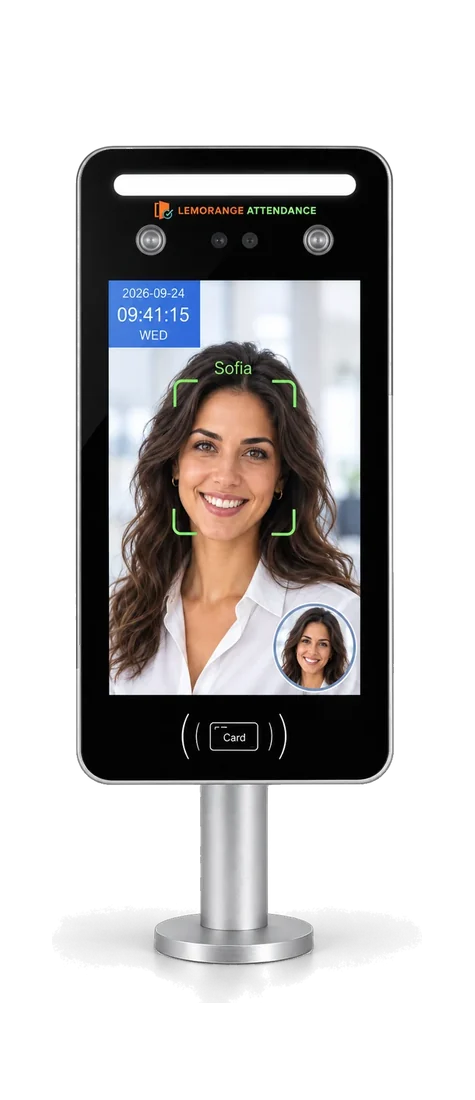
  • TM-AI03FP

    We ran seven checks on a physical unit: every method it supports, in and out, a disconnect and replay, a duplicate event, an unknown enrolment, and a shift across midnight.

    Every method on the list, five faces at once, and the only one rated below zero: −15°C, for an outdoor gate or an unheated bay.

    • Face
    • Fingerprint
    • Card
    • QR
    • PIN
    TM-AI03FP in full
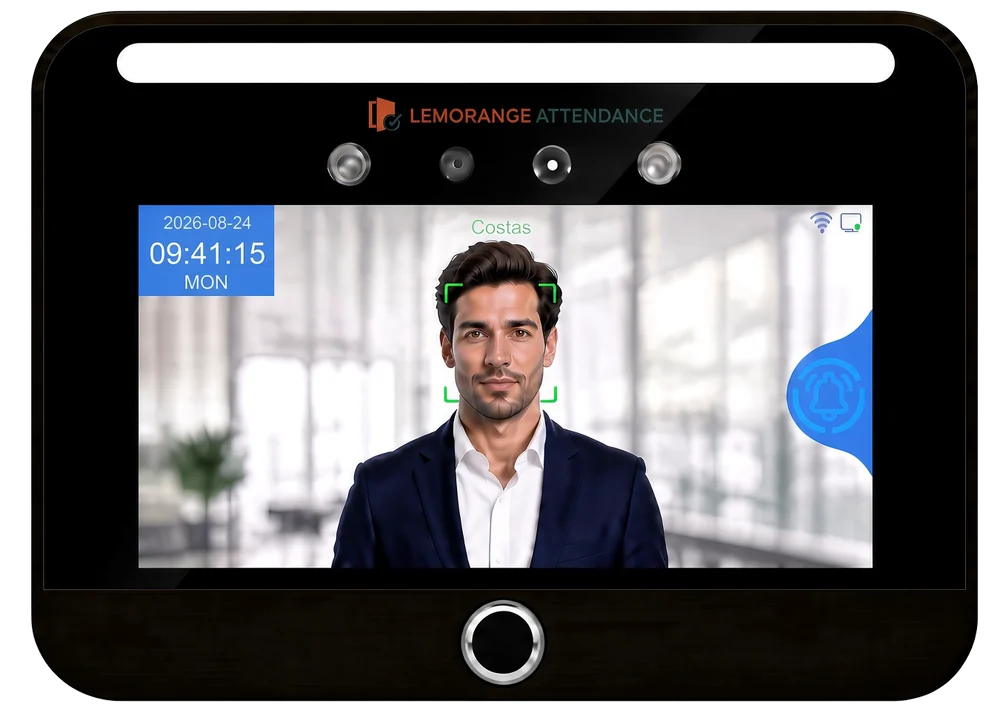
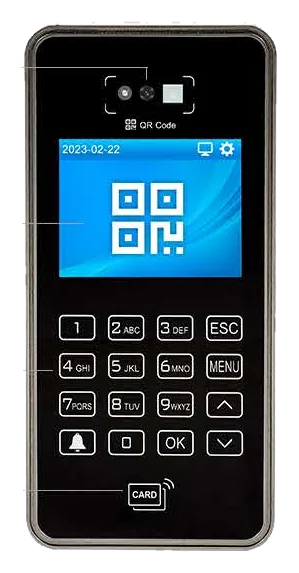
  • Q8

    It carries punches into Attendance and is supported. It has not been through the seven recorded checks on a physical unit that the two face terminals have.

    The least terminal that still controls a door and records the punch. For the four side entrances rather than the main one.

    • QR
    • RFID card
    • PIN
    Q8 in full
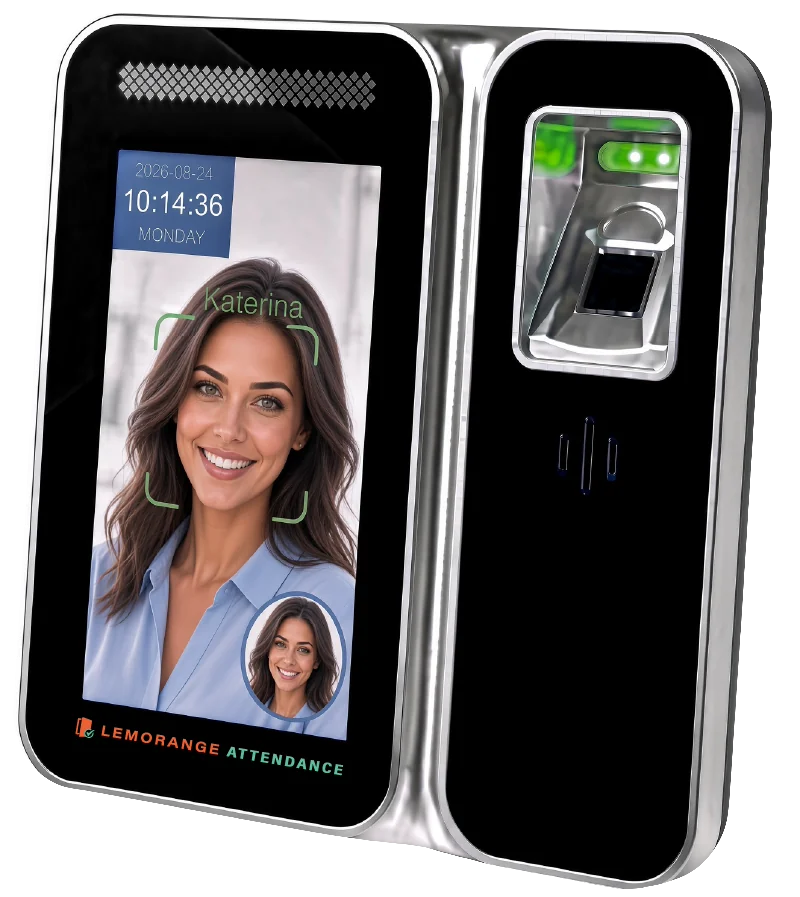
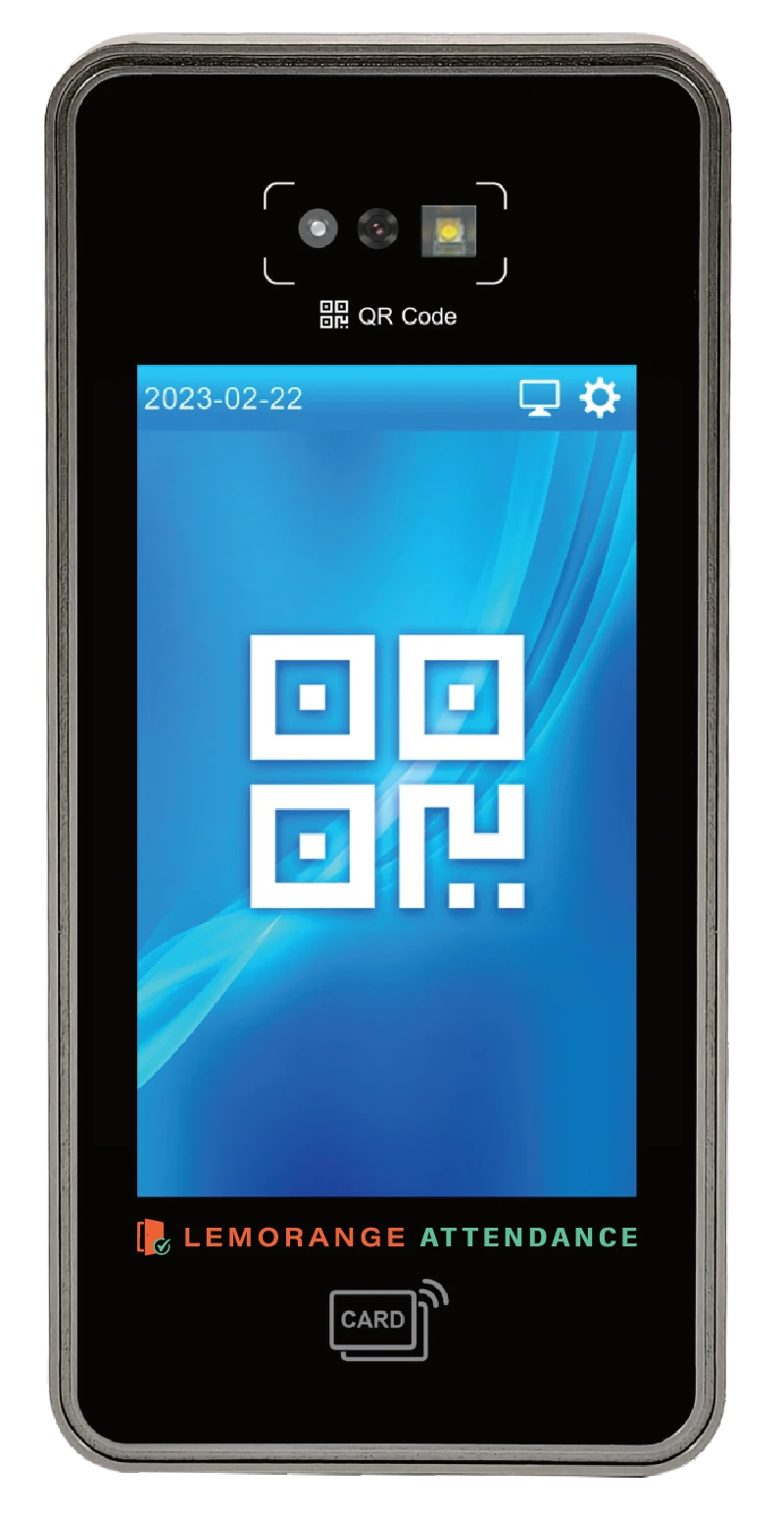
  • Q9

    It carries punches into Attendance and is supported. It has not been through the seven recorded checks on a physical unit that the two face terminals have.

    No camera and no biometrics: a QR code off a screen, an NFC phone, a card or a PIN. Narrow enough for a door frame at 165 × 80 mm.

    • QR
    • NFC
    • RFID card
    • PIN
    Q9 in full

What integrated means here

Seven checks on real hardware, or we do not claim it.

All four terminals are integrated. AI24F and Ai03FB additionally carry a recorded certification against physical units, and that distinction is kept because it is true and it is the kind of precision a buyer with an existing estate should be able to rely on.

  1. Enrol a test employee and confirm the terminal reports the enrolment id we expect.
  2. Produce a punch with every verification method that unit supports.
  3. Test explicit in and out, and confirm the direction maps correctly.
  4. Disconnect the gateway, produce punches, reconnect, and confirm every one is imported.
  5. Submit a duplicate event and confirm it is recognised as one punch, not two.
  6. Punch with an unknown enrolment, create the employee, and confirm the held event replays.
  7. Run a shift across midnight and confirm it lands on its local start date.

How they connect

Terminals reach the gateway. The gateway reaches us. We also come looking.

  • Terminals connect outbound to the TmAi24f gateway on your network. Nothing needs to accept inbound traffic from us.
  • The gateway pushes events to Attendance with a per-site API key, held only as a hash and shown once when it is created.
  • Attendance also polls the gateway for access logs on a watermark with a five-minute overlap, so a push that never arrived is still collected.
  • Per device we show whether it is online, when it was last seen, and whether collection is current or overdue.
  • Move a terminal between sites without losing the attendance history attached to it.
  • Power over Ethernet on every terminal, so a door needs one cable and no socket beside the frame. Wired Ethernet or Wi-Fi for the data, and a DC supply where a run has no PoE at the other end.

On the phone

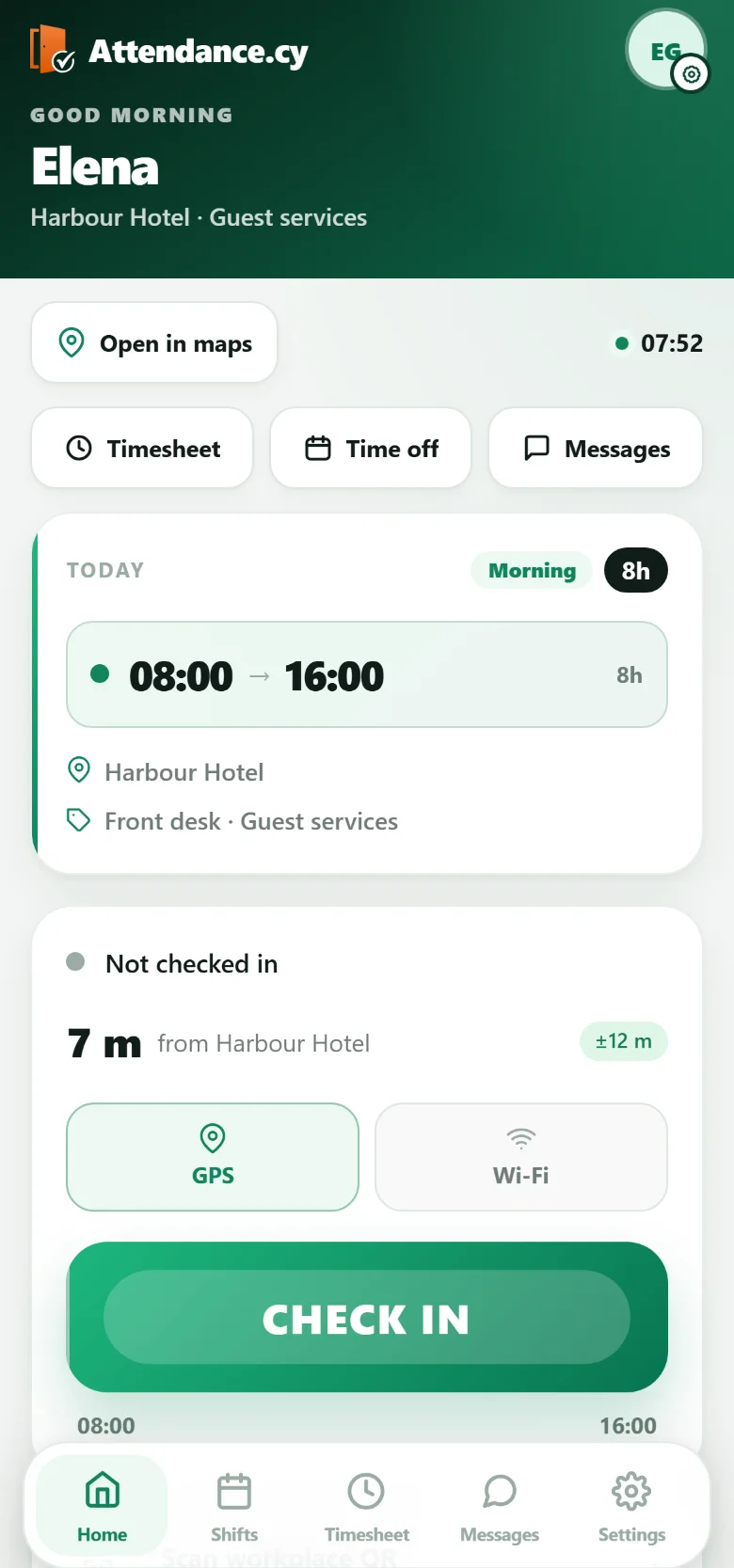
A phone can prove attendance, but only the ways you allow.

GPS geofence
A radius you set per site, from 25 to 5000 metres, 150 by default. Coarse fixes are rejected rather than accepted on trust.
Site network
Matched on your IP range. Wi-Fi name matching is limited by the phone platforms themselves, so IP range is the reliable form.
Reception QR
Displayed at the desk and re-rolled every few minutes, so a photographed code is worthless within minutes.
Device biometric
Face or fingerprint on the phone proves who is holding it. We never let that stand in for being at work.
NFC
Tap the phone at the door instead of carrying a card, using the same credential the readers already accept.

Controls

  • Require any one method, or require all of them, per site.
  • Off-site check-in is a setting. When it is on, those check-ins are recorded and flagged, never hidden.
  • A phone is enrolled once with a code you issue. The token is held in the platform keychain, and revoking it takes effect on the next attempt.
  • A check-in made with no signal is queued and replayed with the time it happened, not the time the network returned.
  • Every attempt is written down, including the refusals, with the reason, the distance we measured and the network we saw.

Already have terminals on the wall?

Tell us the models and how they are connected today. If they are on the list, there is nothing to replace.